

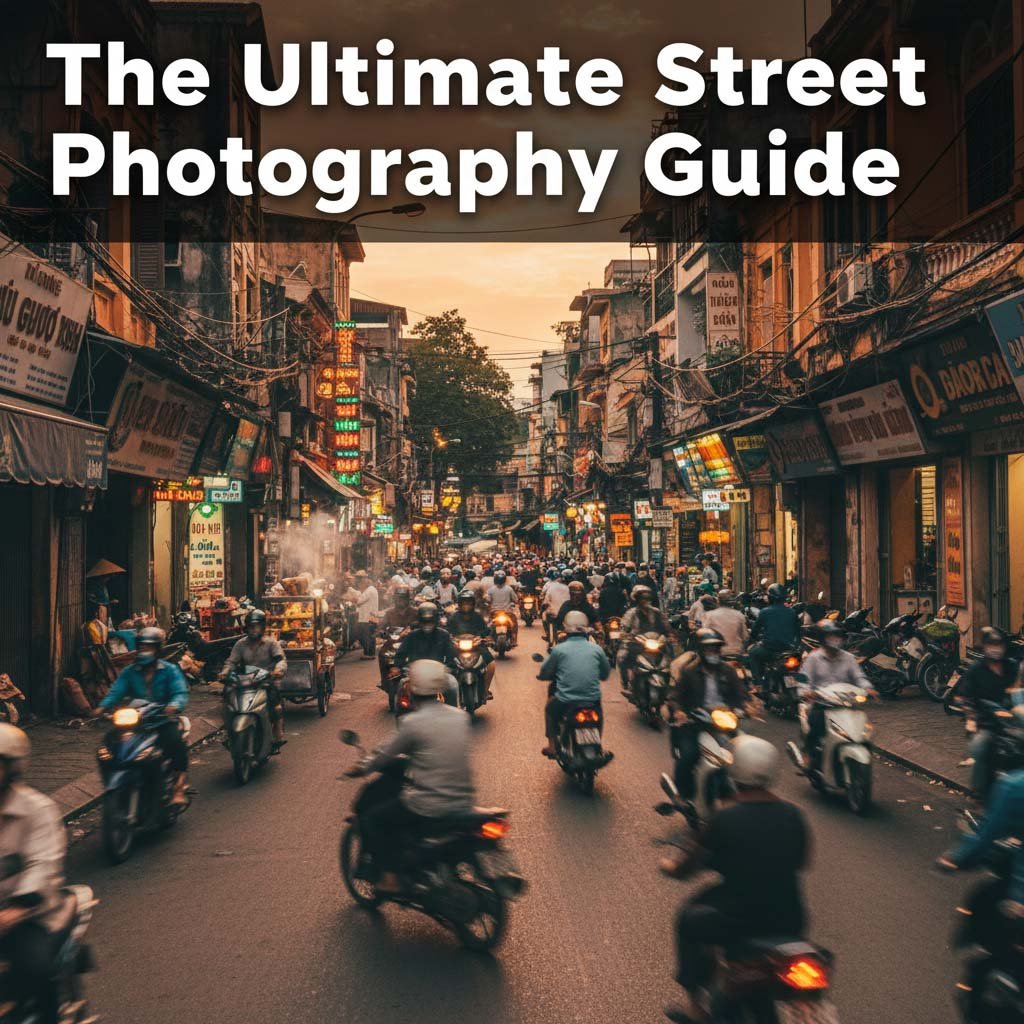
Street photography in Southeast Asia has a rhythm unlike anywhere else. Bangkok and Saigon, two of the region’s most energetic cities, give photographers an endless stream of motion, neon, people, and everyday moments that feel cinematic without effort. Whether you’re carrying a full kit or traveling light, these cities reward anyone willing to slow down and look.
This guide breaks down how to approach street photography in both places, the gear that works best, and the techniques that help you capture authentic scenes — especially when you love shooting people, objects, and anything that catches your eye.
Why Bangkok and Saigon Are Perfect for Street Photography
Both cities are built on contrast. You’ll find modern skylines sitting beside aging alleyways, tuk-tuks weaving past high-end malls, vendors working under neon lights, and quiet corners only steps away from total chaos. This contrast is what makes them ideal for storytellers.
- Bangkok gives you layered streets, strong color, river culture, and vibrant night markets.
- Saigon offers constant movement, warm tones, motorbike density, and spontaneous human moments everywhere you turn.
You don’t need a specific “favorite spot.” Walking with no plan is often where the strongest images come from.
Your Gear: Shooting With a 35mm and 85mm
Travel photographers often carry multiple lenses, but working with just two primes is one of the best ways to stay consistent and flexible.
35mm — Your Storytelling Lens
The 35mm is wide enough to show context and tight enough to isolate subjects when needed. It works well for:
- Street vendors
- Moving crowds
- Architecture mixed with people
- Neon-lit scenes at night
It’s the lens that lets the viewer feel like they’re standing right next to you.
85mm — Your Compression + Character Lens
An 85mm is perfect for capturing candid moments without stepping into someone’s personal space.
Use it for:
- People doing everyday tasks
- Motorbike riders waiting at lights
- Isolated objects or details
- Portrait-style street shots
The compression adds drama, especially in busy streets.
Shooting at Night: Why Neon Works
Even though you can shoot at any hour, night in Southeast Asia has its own energy. Neon signs, wet streets, street food smoke, and headlights reflect off everything. Shooting at night helps:
- Add mood without artificial effects
- Create natural contrast
- Produce cinematic color straight out of camera
- Highlight faces, objects, or details in unexpected ways
Both Bangkok and Saigon glow differently.
Bangkok leans toward cool neon blues and purples, while Saigon gives you stronger yellows and reds from its older districts.
How to Approach the Streets With No Fixed Plan
You mentioned that you like to shoot whatever catches your eye — this approach is perfect for Southeast Asia. Rather than chasing specific locations, focus on:
1. Movement
Watch for people crossing streets, carrying bags, adjusting helmets, preparing food, or taking a break.
2. Contrasts
Old vs. new, light vs. shadow, traditional vs. modern.
3. Texture
Rusty signs, peeling paint, street food carts, storefront reflections.
4. Human moments
This is your strength — capturing people doing random, everyday things. These scenes often tell more truth than posed portraits ever could.
5. Layers
Shoot through windows, behind objects, or between crowds to create depth.
Practical Tips for Bangkok
Even without a favorite spot, a few areas consistently offer strong photo opportunities:
- Chinatown (Yaowarat): Neon signs, food vendors, reflective metal surfaces.
- Soi Nana (Chinatown area, not Sukhumvit): Artsy bars, alleys, great low-light textures.
- Khlong Toei Market: Raw, real, busy — especially good with an 85mm.
- Riverside near IconSiam: Long exposures, ferries, silhouettes against the skyline.
Wander until something grabs you — that’s the shot.
Practical Tips for Saigon
Saigon rewards curiosity more than planning. Some high-yield areas:
- District 1 & 3 alleyways: Laundry lines, scooters, families, and daily life happening in tight spaces.
- Nguyen Hue Walking Street: Perfect for capturing motion and crowds.
- District 5 (Cholon): Temples, markets, older architecture with character.
- Any intersection at rush hour: Thousands of motorbikes become natural leading lines.
If you enjoy capturing people doing interesting things, Saigon is a gold mine. Everywhere you look, someone is cooking, selling, fixing, carrying, shouting, or laughing.
Camera Settings That Work Well in Both Cities
- Aperture: f/1.4–f/2.8 for subject separation
- Shutter: 1/250 or faster for moving people
- ISO: Don’t fear ISO 3200–6400 at night — both cities are dim but full of color
- White Balance: Auto works, but tungsten/neon presets add mood
- Focus Mode: AF-C for moving subjects, AF-S for objects
You only need small adjustments depending on the street.
The Art of Capturing People Doing “Random Things”
This is your signature. You shoot people in honest moments — not staged, not posed, just real life unfolding.
Look for:
- Someone fixing their hair
- A vendor resting their head
- A rider adjusting a helmet
- A person daydreaming by a window
- Two friends sharing a quiet conversation
- A food seller wiping steam from their glasses
These are the images that feel intimate without invading privacy. They also age well — they become documents of city life.
Let the City Lead You
Bangkok and Saigon don’t require elaborate planning or rigid shot lists. They reward photographers who observe, wait, and react. With a 35mm and 85mm, you’re already equipped to capture everything from tight human moments to wide city layers.
Walk slowly. Shoot what interests you. Trust your eye.
In Southeast Asia’s biggest cities, every corner can become a story.

